
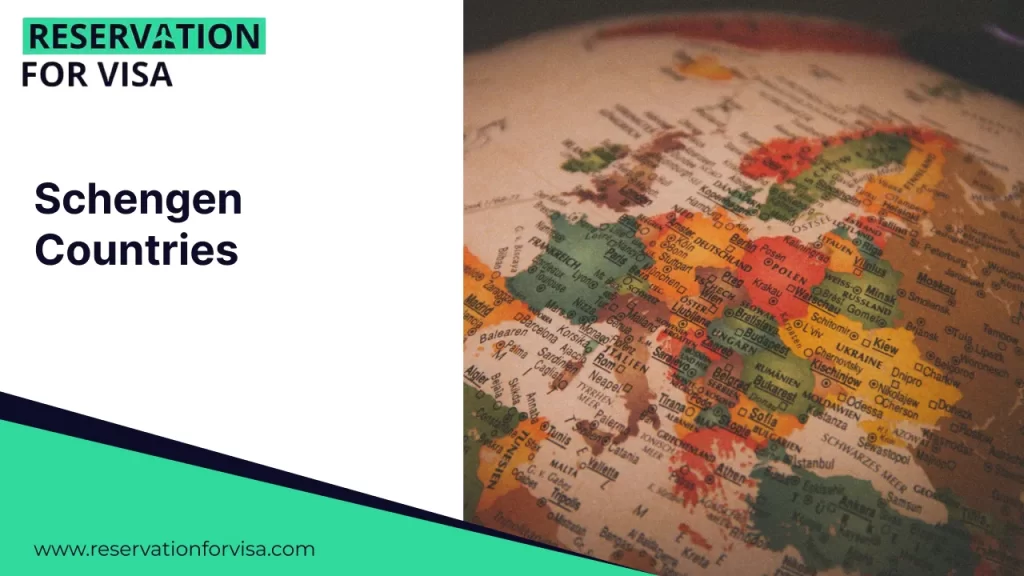
The Schengen area includes 29 European countries. You can travel to as many countries as you want. This is because they have zero internal border controls to freely travel from one place to another.
Therefore, the following article will help you provide details about the Schengen countries. Moreover, it also highlights the history of the Schengen Agreement and the names of the member states. So, make sure to read it thoroughly.
History of the Schengen Agreement
This is an agreement between 29 European countries for passport-free travel between the connected states. Moreover, the countries signed it on June 14, 1985, in the small town of Luxembourg in the Schengen region.
Initially, only five countries signed this agreement. This includes,
- Belgium
- Germany
- France
- Luxembourg
- The Netherlands
The purpose of this agreement is to remove border controls between these states to create a Schengen zone. This will help travelers travel without passports or visas.
Latest information
Currently, there are 29 Schengen countries, including mostly the European Union member states.
Furthermore, the Schengen Agreement strongly influenced travel throughout Europe however, there have also been difficulties with the agreement in recent years. For instance, this may include the refugee crisis and terrorism worries. While some nations have temporarily reintroduced border controls, the objective is still to preserve the Schengen Area.
List of Schengen countries & Its Major Signatories
The Schengen zone has one of the most powerful military and economic industries in the world. Moreover, these countries enjoy political influence from all over the world.
France
France is one of the main members of the Schengen Agreement. Moreover, it has been a part of this area since the beginning. Besides, it is an important country due to its location and joint border with non-Schengen countries including Switzerland, Andorra, and Monaco.
Therefore, this makes France an important transit point between Schengen and non-Schengen regions for travelers.
To prevent illegal immigration and protect the security of the Schengen Area, France is required to abide by the Schengen rules and regulations. This is similar to all other Schengen member states. One such requirement is the maintenance of effective border controls on the Schengen Area’s external borders.
Germany
Similar to France, Germany is also the leading member and part of the Schengen zone since the start. The country joins its borders with other Schengen countries including the following:
- France
- Austria
- The Netherlands
- Denmark
That’s why Germany has an important central location to facilitate movement between different parts of the Schengen zone. Travelers can also transit between these areas.
Germany can therefore freely move people and goods throughout this region. The nation bears the additional responsibility of safeguarding the entire zone.
Moreover, the Schengen Agreement has strengthened relations and promoted greater partnerships between Germany and other EU members. In addition, it also facilitates cross-border trade and tourism.
Spain
Spain became a member of the Schengen region in 1995. It was exactly ten years after the Schengen Agreement was signed.
Besides, the country is also famous for its location on the Iberian Peninsula. It also shares its land borders with two other Schengen countries such as Portugal and France. It is also a popular tourist destination for international travelers.
Furthermore, the country needs to make sure that it follows the Schengen rules and regulations. For instance, this may include effective measures to protect border controls. As a result, there will be fewer chances of illegal immigration and threats to the region.
Moreover, the Agreement has helped to create a strong connection between Spain and the neighboring European Union member states.
Italy
Italy joined the Schengen region in 1995. Moreover, as a Schengen member state, it has removed border controls with other Schengen countries. Therefore, you can freely travel to any part of this region without a passport or visa.
The country shares its borders with Austria, Switzerland, France, and Slovenia. Besides, it occupies the most important location on the map of Earth, which is the Southern border of the European Union. The Schengen Agreement has facilitated tourism and trade across the borders.
Norway
Norway became a member of the Schengen Area in 2001. However, it is not a member of the European Union but of the Schengen Area.
The country can enjoy the free movement of people and goods across the border. But, Norway doesn’t need to follow the EU rules as it is not its member.
Norway has a long coastline that borders both the North Atlantic and the Arctic Ocean. Moreover, it shares land borders with Sweden, Finland, and Russia, making its membership in the Schengen Area noteworthy. As a result, Norway serves as a vital hub for travelers transferring between the Schengen Area’s regions and is essential to maintaining the security of the region’s borders.
Additional Schengen states
The following are additional Schengen countries members:
- Austria
- Belgium
- Bulgaria
- Czech Republic
- Denmark
- Estonia
- Finland
- Greece
- Hungary
- Iceland
- Latvia
- Liechtenstein
- Lithuania
- Luxembourg
- Malta
- Netherlands
- Poland
- Portugal
- Romania
- Slovakia
- Slovenia
- Spain
- Sweden
- Switzerland
General Information about a Schengen Visa
A Schengen visa, aka a short-stay visa, will allow you to stay within the Schengen zone for at least three months. It has a validity of one hundred and eighty days. Moreover, you can visit any Schengen country without getting a new permit.
This is because the 29 countries have no internal border checks that allow free movement from one state to another.
Who can have it?
If you are a citizen of a non-Schengen country, you must get this visa to travel to the target country. Besides, you can use it for tourism, study, or business purposes. This visa allows you to enter or exit the Schengen zone multiple times within its validity period.
If you want to get this visa, you must apply to the embassy of that specific Schengen country you plan to visit. Moreover, the respective mission may also request you to submit the following supporting documents.
- Financial documents
- Proof of travel insurance
- Flight reservation
The visa process
Please note that the visa application process depends on various factors. For example, this may include the visa type you apply for and the target country.
It is important to remember that entry into the Schengen Area is not guaranteed by having a Schengen visa. The final decision about whether to allow entry or not rests with the border officials at the point of entry. Besides, they take into account various factors like the reason for the visit and the validity of the visa.